

Russia: The Largest Country in the World
With an area of 17,098,242 km², Russia covers about 11% of the world’s landmass. This vast region consists of 85 federal units and shares land borders with fourteen countries.
Natural Beauties of Russia:
Russia’s diverse climate and geographic regions offer a unique discovery area for nature lovers:
- Siberian Tundra: Known for its endless steppes and cold climate, this region stands out with its wild nature and rare animal species.
- Mount Elbrus: At 5,642 meters, Elbrus is the highest mountain in Europe and a popular route for climbers.
- Lake Baikal: The world’s deepest lake at 1,642 meters, home to many endemic species.
- Kamchatka Peninsula: Ideal for nature lovers with its hot springs, active volcanoes, and rich biodiversity.
- Altai Mountains: A favorite place for nature lovers and mountaineers, famous for its rich flora and fauna.
Culture and Traditions of Russia:
Russia is known for its rich cultural heritage and deep-rooted traditions:
- Literature: World-renowned authors like Tolstoy, Dostoevsky, and Pushkin are pillars of Russian literature.
- Music and Ballet: Russia’s artistic heritage includes composers like Tchaikovsky and Rachmaninoff and the Bolshoi Ballet Theatre.
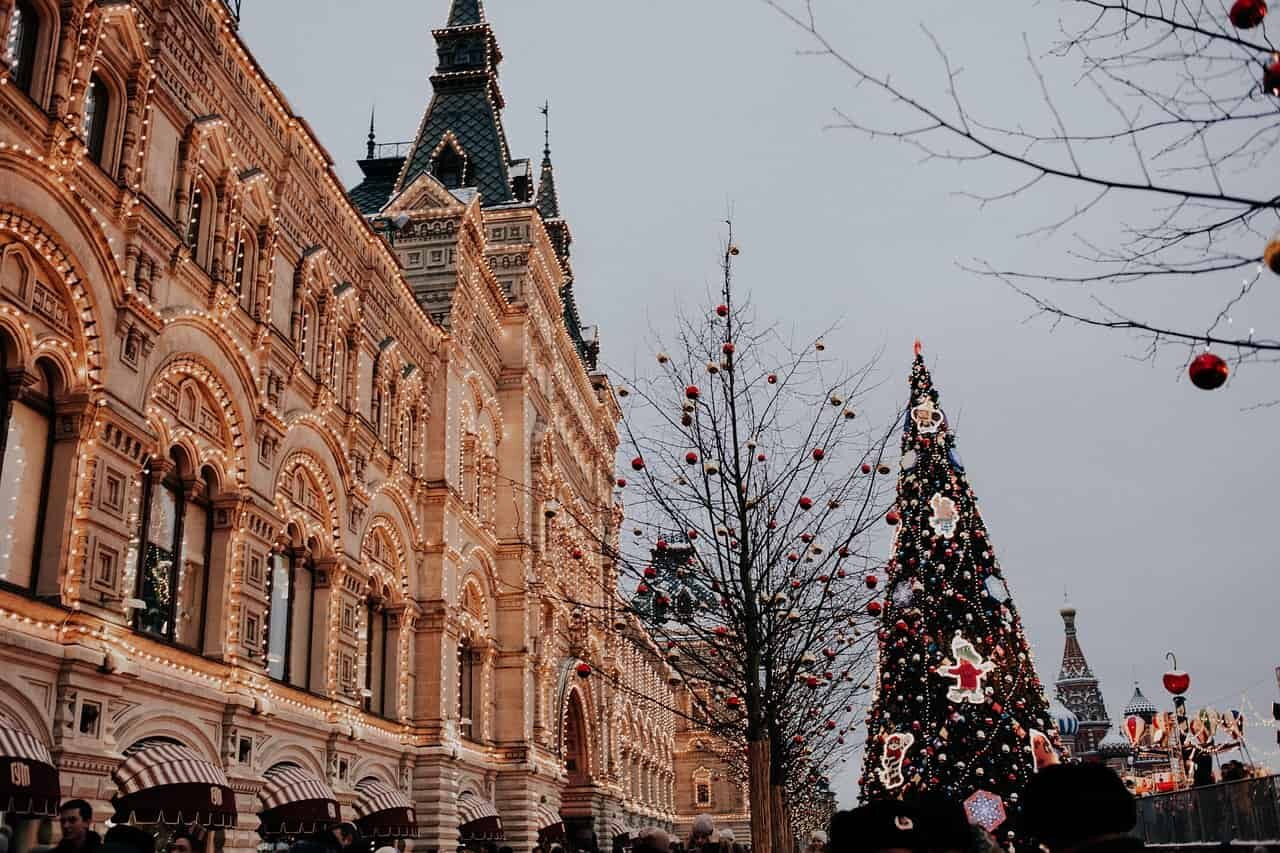
- Architecture: The Hermitage Museum in St. Petersburg and Red Square in Moscow reflect Russia’s rich architectural past.
- Traditions: Religious holidays such as Christmas and Easter are celebrated with great enthusiasm. Traditional ceremonies like the Russian banya (sauna) are also part of the culture.
Russian Cuisine:
Russian cuisine is diverse and rich, varying by region but generally delicious:
- Borscht: A beet soup popular in winter, served with sour cream.
- Pelmeni: One of Russia’s traditional dishes, meat-filled dumplings.
- Blini: Thin crepes that can be sweet or savory, especially popular during Maslenitsa (Pancake Week).
- Caviar: A traditional and luxurious ingredient of Russian cuisine.
- Vodka: One of Russia’s cultural symbols and its national drink.
Russia’s Historical and Architectural Heritage:
Russia’s impressive architecture has a deep history:
- Tsarist Era: The vast borders and beautiful palaces of the Russian Empire bear the marks of this period.
- Soviet Era: Buildings constructed by the Soviet Union, especially in Moscow.
- Modern: Russia’s capital Moscow stands out with its modern buildings and historical texture.
- UNESCO World Heritage: The Kremlin and Red Square, the historic center of St. Petersburg, and Kazan Cathedral are listed by UNESCO.
Russia is a country worth seeing for its size, history, culture, and natural beauty. It is a perfect place for those seeking an experience immersed in nature, history, and culture.