

Belarus Travel Guide:
Belarus (White Russia), officially known as Belarus, is one of Eastern Europe’s quiet, orderly, and intriguing countries. Though it doesn’t attract as many tourists as its neighbors—Poland, Lithuania, Russia, and Ukraine—it offers unspoiled nature, calm cities, and remnants of the Soviet era just waiting to be explored. Belarus is also among Europe’s most environmentally friendly nations.
Natural Wonders of Belarus:
Forests, lakes, and wetlands are splendid. About 40% of the country is covered by forests. Belovezhskaya Pushcha National Park is a UNESCO World Heritage Site and one of Europe’s oldest forests. It is also home to the endangered European bison.
Lake Narach, Belarus’s largest lake, is ideal for camping, cycling, and walking. Bird watchers flock to the Berezinsky Biosphere Reserve. With countless lakes and rivers throughout the country, canoeing, fishing, and swimming are possible.
Belarus is a peaceful destination for those seeking a nature-immersed vacation.
Cultural Richness of Belarus:
Belarusian culture is a unique blend of Slavic traditions and Soviet legacy. The country holds art, music, and theater in high regard. The National Art Museum and the Belarusian National Opera in Minsk best reflect this cultural wealth.
Mir Castle and Nesvizh Palace are UNESCO World Heritage Sites. These structures combine Renaissance, Gothic, and Baroque styles, illuminating Belarus’s aristocratic past.
Architectural diversity between Orthodox and Catholic churches is striking. Jewish cultural heritage is also deeply visible, with cities like Brest and Vitebsk highlighting this historical diversity.
Traditional costumes, handmade crafts, wood carving, and seasonal festivals reflect Belarusian folk culture.
City Life in Belarus:
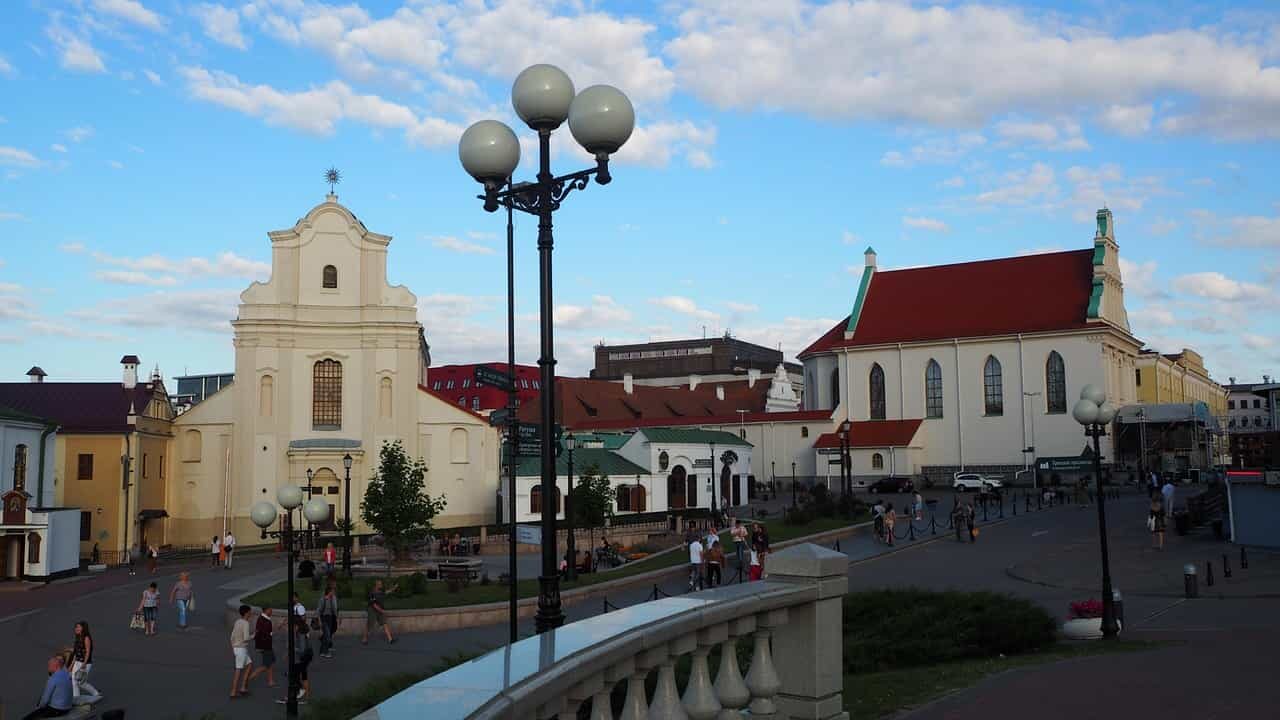
Urban life in Belarus features modern buildings, wide boulevards, and a calm, orderly atmosphere. Minsk—the country’s heart—is known for its spacious squares, Soviet architecture, museums, and parks. Notable spots include Independence Square, the Victory Monument, the Trinity district, and Gorky Park.
Brest lies near the Polish border and holds an impressive WWII memorial complex. Vitebsk, the birthplace of Marc Chagall, is famed for its artistic events.
The people of Belarus are typically safe, clean, and orderly. Though traffic can be heavy, public transportation is regular and widely used.
Belarusian Cuisine:
Belarusian cuisine is known for hearty, simple, and naturally based traditional dishes, relying on potatoes, cabbage, mushrooms, meat, and dairy. Belarus has one of the highest per capita potato consumption rates in the world.
Draniki are potato pancakes, served with sour cream or meat. Machanka—a thick meat stew often served with pancakes—is another staple.
Soups like solyanka and borshch (beet soup) come from Belarusian and broader Slavic cooking traditions. Traditional desserts made with honey, apples, and pastries are also popular.
Kvass (fermented bread drink), kompot (fruit juice drink), and homemade liqueurs are widely enjoyed.
Shopping in Belarus:
Local craftwork, traditional textiles, and items reminiscent of Soviet memorabilia stand out in Belarusian shopping. Komarovski Market and the GUM shopping center in Minsk offer both traditional and modern shopping experiences.
Tourists favor handmade linen cloths, embroidered table covers, wood-carved ornaments, and traditional ceramics. Nostalgic gifts like Soviet-era badges, medals, and postcards are great choices.
Local honey, natural jams, and herbal teas are popular both for tasting and gifting.
Practical Info – Belarus Travel:
- Visa: Turkish citizens may travel to Belarus visa-free for up to 30 days. However, travelers arriving from outside Belarus—such as from Russia—may need a visa.
- Languages: Belarusian and Russian are official. English is limited but more common among younger people.
- Currency: Belarusian Ruble (BYN).
- Transportation: Intercity bus and train networks are widespread. Minsk offers efficient metro and bus service.
- Best Time to Visit: May through September, when weather is mild and nature is vibrant.
Though few travelers give Belarus attention, it is truly a hidden gem. Outside the crowded tourist routes, Belarus offers tranquil nature, historic towns, rich culture, and welcoming people—worthy of every traveler’s radar.